Mattress education
What to Look For When Comparing Vispring Mattress Models
A mattress is a small landscape of springs, fibres, fabric and careful construction. Two models may share a maker’s name yet feel notably different beneath the hand—and under the body. To compare Vispring mattresses thoughtfully, look past broad labels such as “natural” or “luxury.” Examine the materials, spring system, upholstery, dimensions and care requirements, then consider how those details relate to your own sleep.
The most useful comparison is not a contest to find the most elaborate specification. It is a way to understand which construction suits your comfort preferences, bedroom, bed partner and budget.
Begin with the construction, not the name
A model name can help you identify a mattress, but it cannot tell the whole story. “Natural,” “handmade” and “luxury” are broad descriptions; the practical details lie underneath. Read each model’s current specification and identify what is used in the comfort layers, what supports the mattress, how the perimeter is built, and whether the bed can be turned or rotated.
These elements work together. A spring unit provides the underlying response, while upholstery materials shape the surface feel. The border and edge construction affect how the mattress behaves near its perimeter. Tufting or other methods of securing fillings can influence how those layers are held in place. None of these details, considered alone, predicts exactly how a mattress will feel to every sleeper. Together, however, they offer a more useful picture than a model name or promotional adjective.
For a clear comparison, make a short list for each candidate. Record its spring type and count, filling materials and weights where stated, mattress height, available firmness choices, one-sided or two-sided design, and care instructions. If a specification is missing, ask for it rather than assuming that a feature is shared across the range.
Read the materials as a system
Natural fibres and other upholstery materials can differ in density, resilience, moisture behaviour and feel. Wool, cotton, hair and other fibres are not interchangeable simply because they belong to the same broad category. The way they are layered—and the quantity used—also matters. A thin surface layer and a deeper upholstery layer may contribute differently to the initial sensation and the way the mattress settles beneath the body.
When a model lists a material, look for the detail behind the label: Is the material used in the surface upholstery, deeper comfort layers, border or spring encasement? Does the specification give a weight or thickness? Are blends identified? Is a certification named, and does the information explain what that certification covers? Specific answers are more informative than a general promise of purity or quality.
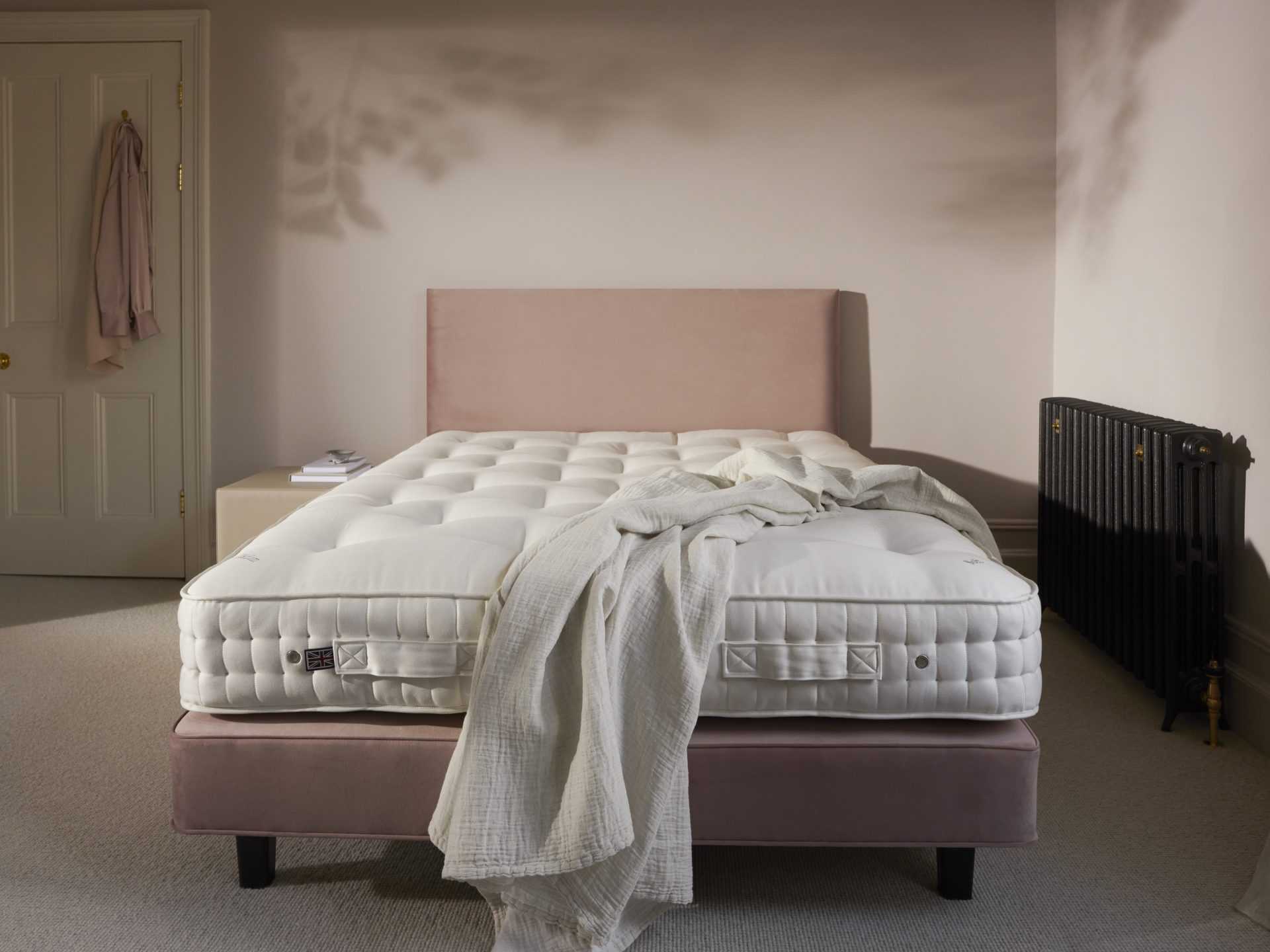
Some Vispring models describe wool and cotton upholstery alongside pocket springs. The Vispring Elite, for example, is listed with British fleece wool and cotton in its surface and additional blended wool-and-cotton upholstery below. Its specification also describes a pocket-spring unit and a hand-stitched border. Those details make it possible to ask concrete questions about the model’s construction; they should not be treated as a guarantee that every sleeper will find it comfortable.
Material preferences may involve more than immediate feel. Some people favour natural fibres, while others prioritise ease of cleaning, allergy considerations, or a particular balance of softness and support. Product descriptions cannot establish that a mattress will prevent or treat a health concern. If allergies or sensitivities are part of your decision, check the complete materials information and seek appropriate professional guidance where needed.
Understand what the spring specification can—and cannot—tell you
Spring design is one of the most visible points of comparison in a mattress specification. Pocket springs are individually encased, allowing each spring to respond more independently than a system in which springs are joined together. That construction can help explain how a mattress responds to pressure across different areas. It does not, by itself, define firmness or establish how much motion a particular bed partner will feel.
Spring count needs context. Counts may vary with mattress size, and a figure for a king-size model cannot automatically be compared with a count listed for a smaller size. Ask whether the number refers to one layer or the whole mattress, which size the figure describes, and whether other models use a different spring arrangement. A larger number is not a universal measure of comfort or quality.
Materials used to make the springs matter too. A specification may identify the metal or describe the springs’ construction, but claims about durability should be read alongside the maker’s warranty, usage guidance and independent information where available. Ask what the warranty covers, what conditions apply, and how the mattress should be supported. A technical term is most useful when it answers a practical question about performance, longevity or care.
Think of the spring unit as the mattress’s underlying architecture. It gives a sense of how support is organised, but the upholstery and your body’s shape, weight distribution and preferred sleeping position all influence the final experience. Two mattresses with similar spring descriptions may still feel different if their comfort layers or firmness options differ.
Compare comfort in the context of your sleep
Comfort is personal, but it need not be mysterious. Start with how you usually sleep: on your side, back, stomach, or in several positions throughout the night. Notice where you experience pressure or discomfort on your current mattress, and whether you prefer a surface that feels cushioned, more buoyant, or comparatively firm. These observations are more helpful than choosing a model because its description sounds impressive.
Sleeping position can guide the questions you ask, but it does not dictate a single correct mattress. Side sleepers may pay close attention to pressure around the shoulders and hips. Back sleepers may want to assess how evenly the surface supports the torso and lower body. Stomach sleepers may be particularly attentive to how the midsection feels. Individual body shape, weight and personal preference influence each experience, so these are prompts for testing rather than clinical rules.
If possible, try each mattress in person. Lie down in your normal sleeping position for long enough to settle, and change positions if that reflects how you sleep at home. Notice whether you feel supported without uncomfortable pressure, whether the surface makes movement easy, and whether the edges feel stable when you sit or lie near them. A brief showroom test is not a perfect forecast of months of use, but it can reveal immediate mismatches.
Ask the retailer how the displayed model corresponds to the version being sold. Confirm the size, firmness, upholstery and configuration, and whether the mattress in the showroom has been used extensively. Check any home trial, exchange or return terms in writing, including time limits, fees and eligibility. Policies can vary by seller, and the existence of a model range does not guarantee a particular trial arrangement.
Account for a bed partner
Sharing a bed adds another body—and another set of preferences—to the decision. Compare what each person wants from firmness, temperature, movement and edge support. A mattress that feels comfortable to one sleeper may not feel the same to another, particularly if the two people have different body types or preferred sleeping positions.
During an in-person test, take turns moving, lying still and getting in or out of bed while the other person pays attention to the response. This simple check can be more revealing than relying on a general claim about motion isolation. If both partners have strong but different preferences, ask whether the manufacturer or retailer offers configurations intended to accommodate different needs. Verify availability and terms for the exact size and model rather than assuming that every option exists across the range.
Bed size also affects usable space. Confirm the mattress dimensions, the internal dimensions of the bed frame and the room’s clearances. A mattress that fits the frame but leaves little room to move around the bed may be inconvenient in everyday use. If one partner sleeps close to the edge, pay attention to how the perimeter feels under weight, and ask whether the border construction is consistent across the models being considered.
Look closely at edges, tufting and finishing
The mattress surface is only part of the experience. Edge construction can affect the usable area and the feeling of stability when sitting or sleeping near the side. In some specifications, hand side-stitching is described as a way of firming the border. Compare how the edges are built on each model, and test them in person when possible. The number of stitching rows or the presence of a particular finish is useful construction information, but it is not a substitute for checking how the finished mattress feels.
Tufting is another detail worth understanding. It can help hold upholstery layers in position, but consumers should avoid assuming that the presence of tufts alone proves how a mattress will age. Ask how the layers are secured, what care is recommended, and what signs of normal settling the maker expects. If a salesperson gives a longevity estimate, ask whether it is a warranty term, an average, or simply a general claim.
Inspect the overall finish: seams, handles if present, labels and the alignment of the border. These observations can help you compare workmanship, though a showroom inspection cannot reveal every aspect of a mattress’s internal build. Use it alongside written specifications and the seller’s answers, not as the sole test.
Check size, height and compatibility
Mattress dimensions and height are practical details with everyday consequences. Confirm the exact length and width in the size you intend to buy, because naming conventions are not always identical across countries or manufacturers. Measure the bed frame, check its support requirements and make sure the mattress is suitable for that foundation. An incompatibility can affect comfort, fit or warranty conditions.
Height can influence more than appearance. It may change how easy it is to get into and out of bed, how fitted sheets sit, and how the mattress works with a headboard or bed frame. If you already own a mattress protector or bedding, check its depth and fit. For adjustable bases or specialist frames, obtain explicit confirmation that the specific model is compatible.
Consider delivery access before ordering. Stairs, narrow hallways, doorways and turns may determine whether a mattress can reach the bedroom. Ask how delivery is arranged, whether old-mattress removal is available, and what happens if the mattress cannot be brought into the room. These details are not glamorous, but they can prevent an avoidable problem on delivery day.
Evaluate care and long-term ownership
Care instructions are part of a fair mattress comparison. Confirm whether the model should be turned, rotated or left in one orientation, and how often the maker recommends any movement. Check whether the mattress has a designated head and foot, whether it has usable sleeping surfaces on both sides, and whether turning it requires help because of its weight. Do not assume that the care routine for one model applies to another.
A washable protector can help shield a mattress from everyday spills and wear. A breathable protector may suit someone who wants a layer of protection without an especially enclosed feel, but materials and construction differ. Check compatibility with the mattress and whether the protector’s care instructions fit your household. A protector is an accessory, not a substitute for following the mattress maker’s cleaning guidance.
Read the warranty and care documents before purchase. Look for the duration, coverage, exclusions, required foundation, evidence needed for a claim and instructions for normal maintenance. Also ask how to respond to stains or accidental spills. Cleaning products or methods that seem convenient could conflict with the manufacturer’s guidance, so avoid improvising on a costly item.
Finally, consider the full ownership cost. Compare the price of the exact size and configuration, delivery, setup, removal of an old mattress, accessories and any return or exchange charges. A lower initial price may not represent the lower total cost if additional services or requirements apply. Conversely, a higher price does not automatically make a model a better fit. The useful question is whether the construction and experience justify the difference for you.
A practical comparison checklist
When you have narrowed the field to two or three options, use the same questions for each. Keeping the comparison consistent helps prevent persuasive wording or a single memorable feature from overshadowing the rest of the evidence.
- Materials: What fibres and other materials are used, and where are they placed in the mattress?
- Spring system: What type of springs are used, what metal is specified, and what size does the listed count refer to?
- Comfort options: Which firmness choices are available in the exact size and configuration you need?
- Construction: How are the fillings secured, and how is the border finished?
- Feel: What did you notice while testing in your normal sleep position, and did both bed partners find it comfortable?
- Dimensions: Does the mattress fit the frame, room, bedding and delivery route?
- Care: Must it be turned or rotated, and what cleaning instructions apply?
- Support and warranty: What foundation is required, and what exactly is covered?
- Purchase terms: What are the delivery, trial, exchange, return and removal arrangements?
Write down the answers and note the source: product specification, manufacturer guidance or retailer policy. If two descriptions use different terminology, ask what the terms mean in practical construction terms. A comparison table can help, but only if it records comparable information rather than mixing a measurement from one size with a claim about another.
Avoid the most common comparison traps
One common mistake is treating “natural” as a complete description. It does not tell you the precise materials, their proportions, the spring design, the care needs or the finished feel. Another is assuming that more springs always means more comfort. Spring count must be read in the context of size, layout and upholstery.
It is also easy to confuse firmness with support. Firmness describes the initial impression of the surface; support concerns how the mattress responds to the body. The words are sometimes used loosely in sales conversations, so ask the retailer to explain what they mean for the particular model. There is no single firmness level that works for everyone, and a harder surface is not automatically a healthier choice.
Finally, avoid comparing marketing language instead of specifications. “Classic,” “premium” or “comfort” may identify a collection or position a product, but these words are not measurements. Translate them into questions: What is inside? How is it assembled? What will I feel when lying down? How will I care for it? What happens if it is not right for me?
Make the decision by matching evidence to experience
Comparing Vispring mattress models is most useful when technical detail and personal testing inform one another. Materials explain the character of the upholstery; spring construction describes the support system; finishing and edge details reveal how the mattress is assembled. Your sleep position, comfort preferences, partner’s needs and bedroom setup determine whether those features make sense in practice.
There is no need to find the mattress with the longest specification. The goal is to identify a model whose documented construction, tested feel and ownership requirements align with your priorities. Read the current model information, ask precise questions, verify the size and terms, and take time to test the mattress if you can. That steady, evidence-led approach is more dependable than choosing by name alone.
Mattress comfort is individual, and product specifications and retailer policies may change. Confirm current details with the manufacturer or seller before making a purchase.